

What Animals Do We Use For Medicine
For centuries, medicine has looked to nature for cures and treatments. Here are our top v picks for medicines derived from nature.
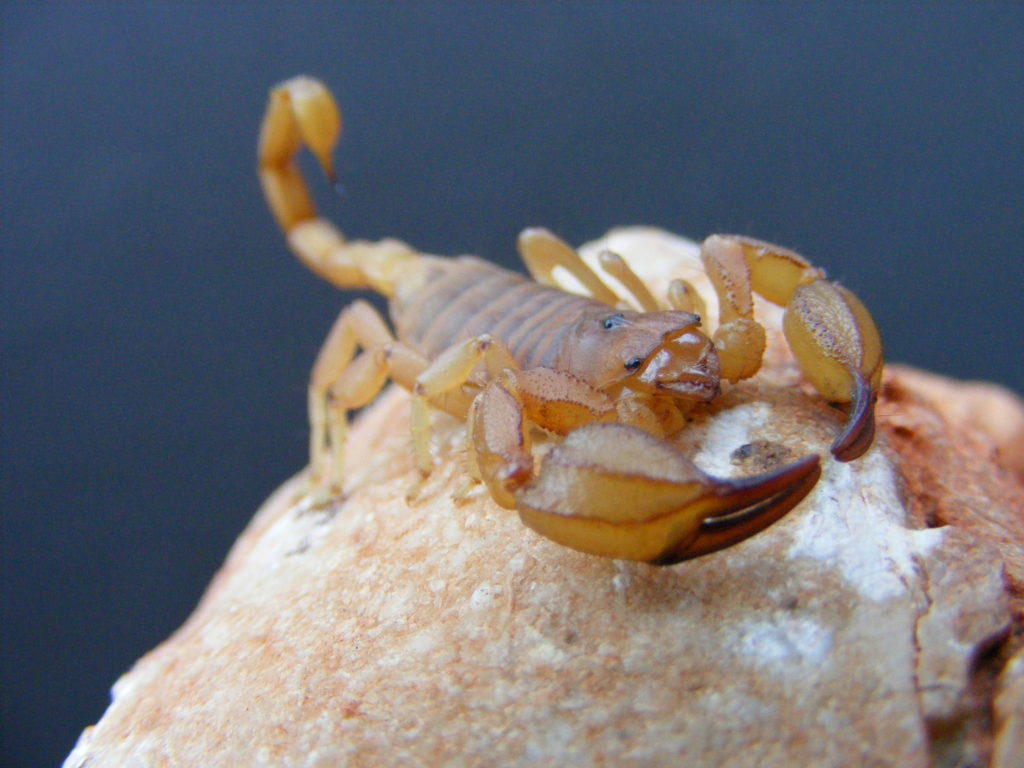
Upon farther investigation, scorpion venom could plow from toxin to medicine in a pinch. Credit: Bill and Mark Bong. Flickr CC BY-NC-SA 2.0.
Nature has provided united states of america with medicines for centuries and even so, scientists continue to find new cures and remedies. Everything from cancer-fighting bacterial pigment to malaria-thwarting chemicals in your gin and tonic, here's our superlative five list of medicines derived from nature:
1. Deep sea bacteria used to treat prostate cancer
A leaner from the bottom of the seafloor that lives in most total darkness has provided the ground for a new therapy to treat early-stage prostate cancer. The active ingredient of the new treatment was beginning produced in the lab from bacteriochlorophyll, which is the photosynthetic pigment of sure aquatic bacteria that depict their energy supply from sunlight. When the chemic solution is exposed to light, it becomes toxic and this feature has been harnessed every bit a treatment. Equally the solution circulates in a patient, doctors shine light directly inside the tumour, which causes toxins to be produced that consequence in damage to the tumour. The clinical trials that have been conducted to appointment are providing very promising results.
The leaner that live in the deep bounding main are difficult to report but a Danish-led research team that examined the bottom of the deepest function of the world's oceans in 2013 constitute the seafloor is a 'hotspot' for bacterial activity. They believe this provides an explanation for what happens to all the organic thing from dead fish and algae when information technology falls to the seabed.

Deploying ocean sampling equipment from the RV Investigator.
Our ain RV Investigator has just returned from a journey off the coast of Australia, where the team on lath were sampling the deep abyss, and found all sorts of mysterious life.
2. Poisonous substance for pain relief
Commonwealth of australia is known to be a hotspot for all things venomous: spiders and snakes and scorpions, oh my! The venom of snakes, at least, has already been successfully synthesised into painkillers, using the African black mamba. Merely, unlike snake venom, which nosotros know plenty about, the venom of scorpions in Australia is poorly understood. That is, saving the report past the University of Queensland which looked at five scorpion species and found potential uses of their venom in pain management drugs. And, with more 60 species of scorpions, perfecting their venom cocktail for 400 meg years, who knows what other therapeutic compounds we could find?
3. Fish skin for burns

Tilapia is widely farmed in Brazil. Credit: Germano Roberto Schuur Wikimedia (CC By-SA 4.0).
Animal peel has long been used in the treatment of burns all around the world, simply in Brazil their iii skin banks only encounter 1 percent of the national need. To address the issue, a medico in the seaside town of Fortaleza is trialling the apply of fish skins to care for fire wounds. Enter the humble tilapia, a fish that'due south widely farmed in Brazil and whose skin, until now, was considered trash. Written report of the fish skin revealed it is high in collagen and has a similar moisture content to human pare. Sterilised skin strips are practical to 2nd- and tertiary-degree burns and, different gauze bandages, actually stay on. The tilapia treatment has reduced hurting and sped up wound healing. Australia has over 5,000 known species of fish, with at least one new species existence described every month. The Australian National Fish Drove (ANFC) is a resource for many fields of science. Could any of these be useful for skin grafting?
four. Perhaps we don't like to think nigh it but maggots have a proven track tape
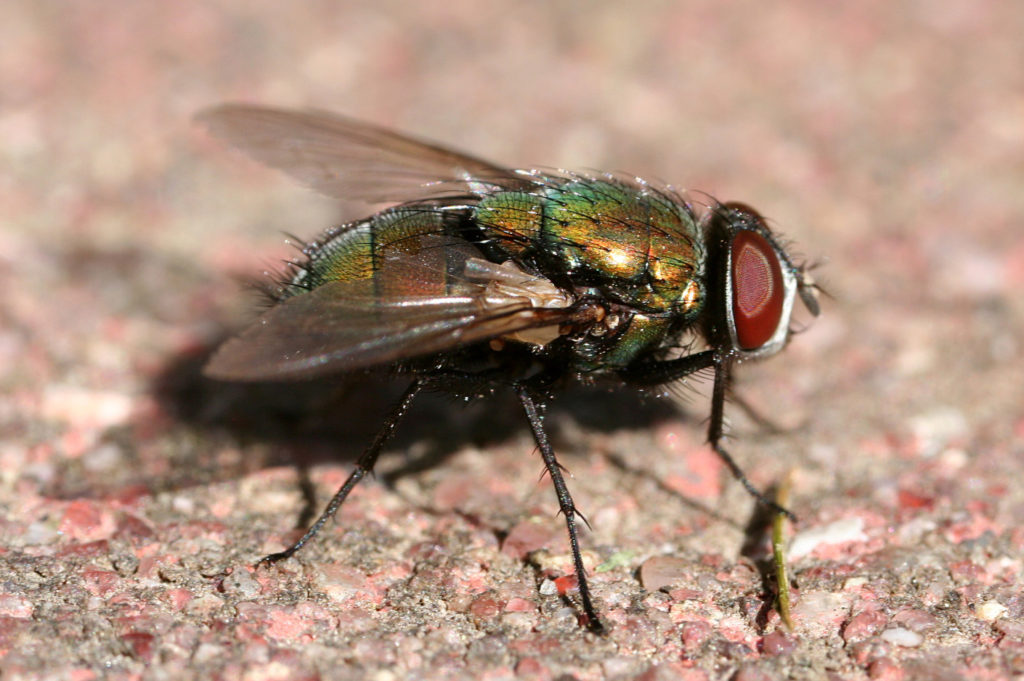
Green Bottle Fly, Lucilia sericata. Credit: Calibas, GNU Complimentary documentation license.
If you are squeamish – read no further! The first recorded intentional use of maggots for wound cleaning is thought to have been when Confederate army surgeon JF Zacharias applied them during the American Ceremonious War. The maggots swallow infected tissue, and in the process cleanse a wound with their antibacterial saliva. The process also helps past speeding up new tissue growth. Fortunately, the maggots merely fall out when they are finished eating and cleaning. These days the process is supervised by "maggot nurses" oftentimes in the condolement of the patients' homes. Sheep blowfly larvae are used to treat diabetic ulcers, bedsores and gangrenous wounds and are a useful alternative for antibiotics. They are currently used in the United states of america, Europe and at Westmead Hospital in Sydney, Australia. It is estimated their use saves Britain'due south National Health Service $two.v billion per yr. The sheep blow wing is merely one type of fly, but there are many more! What other uses might we find in all that diversity? Staff at the ANIC are trying to discover out.
v. The nativity of the gin and tonic
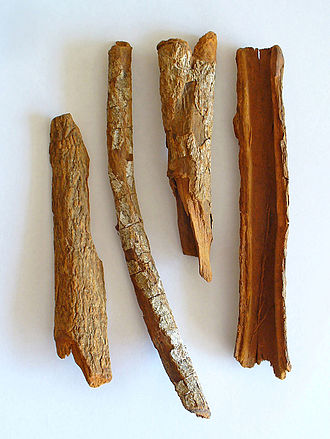
Cinchona officinalis, the harvested bawl Credit: H. Zell (CC BY-SA iii.0)
Quinine is a bitter alkaloid used not just to flavour your tonic h2o, but also to treat and prevent malaria. It is institute in the bawl of the cinchona tree which grows in Andean forests of western South America. The cinchona tree'southward medicinal utilize in the handling of fevers was offset discovered by the Quechua people of Peru, Bolivia and Ecuador. According to legend, the S American Indians knew to drink the waters from below the tree whose quinine made the waters biting. It is at present known that the quinine interferes with the metabolism of the Plasmodium parasite that is transferred by mosquitoes and causes malaria. The cinchona tree is nonetheless the near toll effective manner to produce quinine. Afterward, in 1825, when soldiers of the Indian Army were being given quinine to treat malaria, they began mixing information technology with soda water and gin to accomplish a amend taste, and thus, the gin and tonic was born!
Could nosotros find like uses for our 21,000+ native plants? Our Australian National Herbarium holds more than than one million found specimens. By understanding our biodiversity, the Earth'south life support, we can find the value of our native species in our everyday life.
Source: https://blog.csiro.au/nurture-nature-top-5-species-used-medicine/
Posted by: gibsonwhiclosselte.blogspot.com
0 Response to "What Animals Do We Use For Medicine"
Post a Comment